This week's small step
For the next seven days, spend 20 minutes a day physically distant from your phone. Not in sight, not on your body. Anchor it to something better: quiet time, a family show, a walk around the block. Treat it like a muscle and build from there. (For scale: two hours a day of distance would hand you back a full month of your year.)
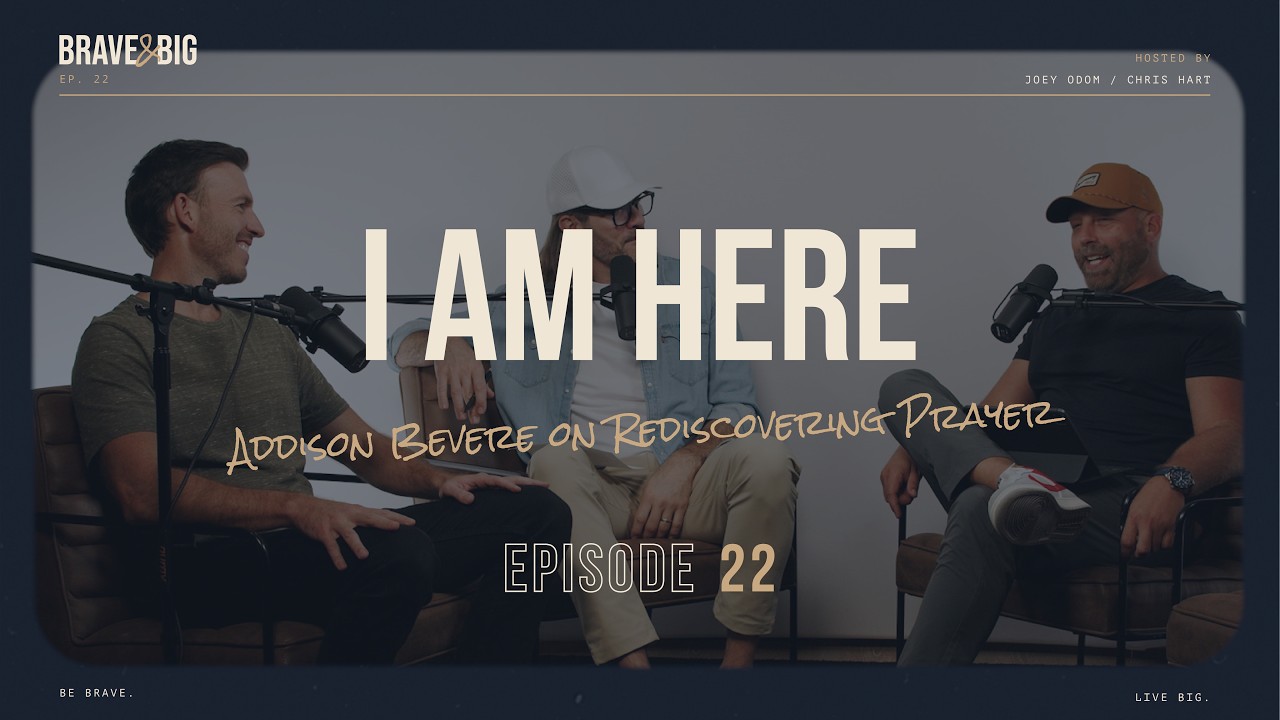
Joey Odom looked down at his phone and missed his five-year-old's first soccer goal, and the moment his son turned to the sideline to find his face. That miss reframed everything, and it opens this conversation about technology, attention, and the relationships that actually matter.
Joey, who co-founded a company built entirely around changing our relationship with technology, makes a case that's more hopeful than the usual doom: our least valuable relationship, the one with our phones, has the greatest impact on our most valuable relationships. And that relationship is something you can edit. He and Chris Hart get honest about their own convictions (the "daddy, watch me" moments, reading a bedtime story with one eye on a screen) and name what's actually at stake, from loneliness and isolation to phones dulling our ability to feel and AI dulling our ability to think.
Then it gets practical and doable. Start with the mirror, not your kids. Watch the 3M parent trap (you model a bad relationship, your kids mimic it, then you get mad at them for it). Get aligned with your spouse. Set one sacred time and one sacred place that stay phone-free. And when someone you love says "watch this," put the phone down and mean it.
In this episode
- Why your least valuable relationship has the greatest impact on your most valuable ones
- The good news hidden inside "Dad, you're on your phone too much"
- Why proximity is the whole ballgame (91% of us keep our phones on us around the clock)
- How phones dull our ability to feel deeply and AI dulls our ability to think deeply
- The isolation trap, and why the promise of connection so often leaves us lonelier
- The 3M parent trap: model, mimic, mad, and how to break it
- Sacred times and sacred places: one of each, phone-free, to change the culture of your home
- The date-night phone swap, and the six words that tell someone they matter more than your screen
REFERENCED IN THIS EPISODE
Jonathan Haidt, The Anxious Generation, and his 2026 TED talk on AI. The idea of cognitive offloading. Blaise Pascal on our inability to sit quietly in a room alone. Stranger Things (the Vecna and "Mr. Sandman" illustration).
Read the full transcript49 sections
0:04Welcome to Brave and Big, where we talk about living a Brave and Big life. I'm Joey Odom, husband to Kristen, dad to Harrison Indiana, speaker, former tech co-founder and author.
0:13I'm Chris Hart, husband to Molly, dad to Blakely, Cooper, Landry, and my son Brave. I'm Mr. Ewan, founder of the Brave Group and Brave Performance Agency. Joey and I have been having these talks for 25 years, and we're better for it. We believe the same will be true for you. Enjoy this episode. Be brave and live big. Brave and big. Man, let's go. A couple guys in gray shirts today. If you're not seeing it, uh just let us tell you about it. Man, we're just wearing these awesome gray t-shirts and we feel great. So be ready for that. Looks great too. You look great and gray.
0:54Anyone ever told you that? Oh, thank you. Oh, come on.
0:57Kind of you. A lot of kind words uh that lead right into. I'm just gonna hype Joey up very intentionally. You're you guys are probably used to that. But for the topic we're gonna dive into, I'm being serious, as a as a friend and a fan, uh Joey has become an expert on this topic. He he is asked by churches around the country, universities, groups, organizations to speak to this topic specifically. So I did want to give him his props on this and create the credibility that hopefully um you you may have thought you needed. But this is a this is a big boy topic. It is real, it is happening in all the world around us, and I am so excited to like engage with you on it and also take all my notes on it too, because I love it when you speak to this and you're great at it. Joey, kick us off on this topic, man. Let's go. We're talking tech today.
1:56We we are um this is, I believe, one of the biggest practical things that parents that families are thinking about is technology and our relationship to it. We're gonna talk a lot about relationships today, and we're gonna talk about tech. And you're what here's what's gonna happen. You're gonna walk away with very, very practical things that you can do today. You're gonna walk away very hopeful, knowing that, oh yeah, I thought this was a monster, and yeah, it's big, but I actually have confidence that I can do something about it. Because Chris, this is this is I remain I I co-founded a business with Heath Wilson, Heath Wilson called Aro, that was all on changing our relationship with technology. And I was in it for years, and I emerged from it feeling the same way I felt the first day, which is this is that this is the most hopeful opportunity any of us have today. Don't listen to the negativity. You okay are is it easy to get freaked out to think about AI sex robots? Yes, very, but that's not that's probably not impacting your home today. So, this is what do you do today? And so you're gonna walk away with hope and confidence and very, very practical tools. So that's my promise to you. Just stick around for the next 40 minutes or so. Does that sound good?
3:09Man, I I love that there is hope and promise on this, and I'm glad you went there because there is so much weird, odd, I don't know what to think. Negativity, we're making stuff up, you know. So you getting practical on this and and giving us tools and giving us hope is a big thing because tech is this entity that everybody's trying to figure out and invest in and mitigate and all the different things. So take us away, big guy. Because the question is, what do I do?
3:38That that's that's the ultimate question we need to ask. So I'll man, I'll kick off with a story um from a few years ago, 2013, fall of 2013, and my son Harrison, you know Harrison, one of your favorite guys in the world, 18-year-old stud now. But man, when he was five years old in 2013, he's playing his very first soccer season. And Harrison is Harrison's the dude, he's the greatest guy in the world. And when he was five, he was the sweetest kid in the world. But I will tell you something, if you ever watch five-year-old soccer, sweet kids aren't scoring goals. So it's it's it's those aggressive, like Chris Hart, aka you know, circa 1985, you know what I mean? Like those aggressive.
4:20But then there's like there's a couple ballers out there, and everybody else is just chasing grass, bulldozing folks.
4:28So this season, Harrison's sweet kid at this point in the season, everybody on the team had scored a goal except for Harrison. So here we are, another Saturday afternoon. Kristen and I go out, Gianna's with us. We go sit on the sidelines for another hour of youth soccer. And and late in the first half, Chris, in the middle of the ordinary, something extraordinary happened. Harrison found himself standing in front of the ball with a goal in his sights. And something happened, and I'll be a little bit dramatic, but it's totally true. What happened next changed me as a father is that Harrison reared back that little leg and he kicked. And just as you're listening to the story, you can imagine it like I do, just like a slow motion scene of a movie, you know, dramatic music in the background, the ball gliding over the grass into the back of the net for Harrison's first soccer goal. And bro, the crowd went wild. I mean, these sweet parents knew exactly what had just happened. His coach runs out on the field, he lifts Harrison up, but there was this little split second in between the ball hitting the back of the net and his coach picking him up. When Harrison did something that five-year-old boys do is he looked to the sidelines, right? To to lock eyes with me, to share this moment with dad, to see the all the pride on my face, smile on my face, and and to share this magical moment together. And it was absolutely magical, except for one little detail, and it's that I missed it. Every bit of what I just described, I completely missed. See, when Harrison turned to the sidelines to see the pride on my face, all he saw was the top of my head because I was looking down at my phone. So I missed that moment looking at my phone. And I had this realization at the moment that that something was wrong, that my relationship with my phone was getting in in the way of my most important relationships. And and I would, and I would maybe summarize it this way as we kick off, is and we're talking we're gonna talk about phones and AI a little bit here today, but specific to my phone, if we think about the relationship we have with our phones, and I would say the problem that I think all of us face is that our least valuable relationship, I think we would, we would agree, our the least valuable relationship we have in our lives is our relationship with phones and technology. But our least valuable relationship has the greatest impact on our most valuable relationships. So there's the there's the the the gut punch, but the good news is that we can edit that relationship. So when you think about that, I mean I'm curious for you, Chris. Like we we think about technology and relationships, and you're such a relational guy. When you think about that for yourself or for others, how does that ring true to you that our least valuable relationship has the greatest uh impact on our most valuable relationships?
7:09Oh, I'm just sitting here convicted like a chump. You know, I'm I'm thinking about the moments where my sweet daughter's voices have said, Dad, are are you paying attention? Or dad, they say it multiple times. Oh, oh dad, hey, look over here. Oh, oh dad, like like politely entertaining my distraction. So yeah, I'm I'm I'm here and I am shocked and and I'm excited, I guess, because I I am feeling the conviction and personally need help. I've I've focused on it at times. It's kind of maybe how I'm processing it right now. There have been so many times we've done a certain Instagram fast, or I'm only gonna check email for a certain amount of time and you know, things like that. But to to really say, okay, let's get this right. Let's not let this thing, I do have a relationship with it. I need to put it in its proper place so that the proper relationships can be the actual singular priority. Yeah. I'm fascinated, I think, with everybody else on on really how to do this well. And then I love the idea of the fruit that I know is going to come from it.
8:17Well, what what's interesting, we've I've heard in in the course of the last seven, seven years, heard hundreds of stories of people saying, similar to what you said, that that thing that your kid just the the the daddy watch me, the mommy watch me moments where kids say it again and again and again. And for somebody, again, I want to I want to really be specific about dispelling any shame here from that, because uh if your kid, if you've ever heard that, if you've had your child say to you, daddy watch me, or even mommy, you're on your phone too much, mom, dad, you're on your phone too much. If you ever heard that, I want I want to give you some encouragement that that's actually some good news because it means two things. Here's what it means first thing it means is that your child likes you, your child wants you to look at them, so that's good. Like we like that. The second part is your child believes that they are worth being looked at. They they believe they have enough value inside that's worth your eyes being on them, and they have not not yet become conditioned to believe that your phone is more important than they are. They still think that that you are that they are more important than your phone. So celebrate that moment. And then it's like, okay, now what do I do? Don't just let shame sit in there. That's good. Shame takes them, shame takes a mistake from the past and tells you about a future that hasn't happened yet. Said you mess this up, so you've messed your kids up. Hold on one second. Like, no, my kids' future isn't written yet, so I'm gonna do something about it now. And it goes back, Chris, it goes back to relationship, it goes back to the fact that we have said very casually in this conversation already, we've talked about our relationship with phones. And hold on a second. I just described something that for however long humanity has been around has been reserved for living objects, living things, like animals or humans, or maybe even plants. If you talk to your plants, I hear that's good for gardening. But we've talked about something of relationship with something living, that a relationship is between two living things. And now we're describing a relationship with an object. Yeah, and so, and so this is a very odd thing that's happened. I don't really know when it entered our lexicon that we started talking about relationships with objects. And so the interesting thing about this is when you look at it, yes, that's weird for adults to have relationships with objects. Like I don't I'm I don't have a relationship with my lawnmower, right? When a conversation gets boring, I don't sneak out for a quick mow like I do with humans, right? They're like I do with my phone. So that is weird, but what it's actually done, it's reverted us back to a childlike state of relationship with objects because kids have relationships with objects, infants have relationships with objects, things like blankies and binkies and teddy bears. So what they do, what those are, those are called comfort objects. There's a they have a very good role in kids' lives. Those comfort objects give children a sense of comfort in the absence of relationships. So when their parents are gone, they cling to this object. So I think it's important within the context of our phones for us today is to recognize that what has happened in the last 18 or 19 years of having smartphones is that we've been reverted back to a childlike state of relationship with an object, but slightly differently. You see, children, they cling to that object in the absence of relationships, and we cling to this object in the presence of relationships. That we that we will be around people that we love. You think about infertility journeys that people have gone on just to have kids, and all of a sudden we find ourselves looking at a screen instead of their eyes when we're at the dinner table. This is a problem. And it is all defined to make this super simple. The defining characteristic in our relationship with our phones, specifically speaking about phones right now, is our constant proximity to them. And this is as basic as you get. This is why it's so hopeful because there are some tiny edits here. 91% of us have our phones with us 24 hours a day. Because of that, we constantly interact with them. 89% of our smartphone usage is self-initiated. So turn off your notifications if you want, but you only can't you only got rid of about 11% there. So it's us only because they're with us. And we begin to remove the we begin to change the relationship with our phones by changing the proximity we are we we are in with our phones, all of a sudden we begin to reshape that relationship. So I'm curious about that with this. This with as you think about maybe your phone usage, you maybe think about people around you, how much of that is in that environment where it's just like, yeah, it's just kind of with me. So I glance at it. Maybe even the examples you use with your daughters, like how has that shown up for you when you think about that proximity being the divining characteristic in your relationship?
12:40Oh, I think about everything we probably think is uh critical or important. You know, so I immediately think about conversations we've had of I I I need to be ready to respond, because what if this is the deal? Right. That that one could become so I know it's eight o'clock at night, but if that but it'd be great if I responded right away, right? And I think about the even then the silly stuff, because we're so used to it, because the proximity is there, any second that we're not being stimulated by something else, and when we are think about the the number of times you're watching a movie and on your phone and somebody's talking to you, and so it's this multi-stimulant that we're just okay with now. Yeah, and and really, Joey, where I initially thought, I'm like, wait, a massive tactic of the devil in every generation is simply distraction. That's it. And so I I don't want to get it off track here, but I remember somebody saying America changed when we got indoor air conditioning. Because people used to sit out on their porches and interact with the neighborhood. Well, well, now we can go inside because it's comfortable and now we can listen to the radio, right? And then radio turned to TV and then TV, right? So it's just interesting. Like it, it this is not a new thing.
14:03That's right.
14:03However, I do think it's maybe a more intense or constant thing that's right that we're that we're battling. So that's kind of where I went with that. It's like, hey, distraction has always been the tactic, and all of a sudden now in the 2000s, man, the the the potential for it is probably exponentially higher because the distraction is literally on us. Our pockets are made to constantly carry it and then keep it by our head while we sleep. It's a yeah, it is amazing that it's just so prevalent. But that's kind of where so, and if he can if he can limit our focus, then we could limit our authority. We could go far off on that, but it's okay. Now the tactic makes sense, and this is what we've got to fix.
14:45You think about the usual suspects, which is a great movie. He says the greatest trick the devil ever pulled was convincing people he didn't exist. So so here's my suspicion, Chris. If you if you were tempted today with murder or adultery, that's probably a quick no from you, right? You you're it's pretty easy for you to say no to. But what maybe it's not is that just that tiny little distraction that can take you off course. So it so it makes you think about a someone who tempts us, and you think about the devil who wants to tempt us, he doesn't have to work that hard anymore because it just takes a little bit of temptation, excuse me, a little bit of distraction to get us away, and then you change one degree in a journey, and then a thousand miles later you're a hundred miles off. So, you know, for me, this this to your point, and and to your point, the fact that it's not it's not new, this this quote that a lot of us know from the 16th century, Blaise Pascal said, all of humanity's problems stem from man's inability to sit quietly in a room alone. My guy said it in the 16th century, bro.
15:47It seemed like there would have been a lot of alone sitting time by a candle or something. Like, that's all I picture them doing then, but apparently.
15:56Yeah, we are, and by the way, like for for people listening, of course, our of course we're looking at our phones, they're awesome. Like I like my this may be a hot take, and I love my kids. My phone's a lot more interesting than them. It's a lot more interesting than them talking about the mundanity of their day. Of course, that's a lot more interesting.
16:15Come on, two good hours on really funny stuff.
16:18It's hilarious. Yes. I mean, it's it's all swing fails at your fingertip. Are you kidding me? That's right. And so here's what happens. I mean, we and we all know this. We we what we do, like a really interesting principle. What the reason why we find ourselves on our phones, it really is these moments to escape. You know, we're we're we're escaping these these feelings that we have. We may feel we may feel lonely, we may feel even just bored, and so we turn to that. And so what it's doing, it's impacting our ability to feel deeply. And so we we because we're escaping these moments. Now, now AI, just to touch on that really quickly, what's interesting about AI is the proximity is not the issues. What's for that is the this the interaction that it's creating for you, and what that's doing, Jonathan Haidt, many of you have heard of Jonathan Haidt, wrote The Anxious Generation. He has a TED talk from April of 2026 that is incredible talking about AI and how we should begin to be managing some of this. But a term that he mentions that's not original to him, I don't believe, is this idea of cognitive offloading, which is a great term, is is we're offloading our need to think. And so you think about kids, and that's one thing for you and me in our 40s. That's another thing for a kid who all they've ever known is not really having to think deeply because the greatest thinker that's ever been around is sitting on Chat GPT or Claude. So when you think about what's really happening here, is that our phones have diminished our ability to feel deeply, and AI has diminished our ability to think deeply. And to me, bro, like that's who I want to be. Man, Joey, man, he's a deep thinker. I mean, I told you on another episode, one of my favorite things is how I feel deeply, and so we are offloading these things in the name of convenience. And I'm not a Luddite, I have an iPhone, I have a subscription to Claude, so I'm not suggesting any of those things. But what is important to be aware is the impact that it's happening or on ability on those couple things that make us uniquely human.
18:28Wow.
18:30My mom's a 40-year educator, and we we've had many a conversation just about this. And there are some fascinating alpha schools and and AI-focused ways of learning and processing, but at the end of the day, it is interesting. Like the reason you do trigonometry is not because you'll ever use it, it's because we're teaching you how to think. And and in other subjects, we're teaching you how to study, we're teaching you how to to learn something and retain it so that you can use it. And you can make the case, it's like, why would I need to memorize anything? Yeah, I just say out loud, what is this? I don't need I don't need any brain power for it. But it you talk about a slippery slope of not having to process, not having to figure things out, so then not being able to. And then if you add to that, Joey, the the human component of feeling, you know what I mean, and and actually having to process and deal with emotion, if if that is removed, that is the essence of our humanity is feeling things and experiencing things and then verbalizing those things, learning from those things, going forward faster because of it, you know. So it it is a I love how you're presenting this, and it's not just uh man, phones are bad. It's like, no, this this is the result of it. Here's some symptoms, and then I'm pretty optimistic about I love that you actually said, Man, I I have an iPhone and I use Claude. That's okay. Yeah, this is not move to the hills conversation, but I like where we're going with it. Let's protect our humanity and then create some guardrails within that.
20:12Yeah, that's right. And and and here's the thing is that some people may walk away from this and say, I actually might need a flip phone. I don't I'm not in any way suggesting it, but you you know yourself, and here's what we know is that the stakes really are so high that this is this isn't something that we should just accept as happening and it's inevitable. We just can't do that. That's not the way I want to live, it's not the way you want to live. If you're listening to this podcast, it's probably not the way you want to live either. So let's not accept what what others are saying is inevitable. Let's think about our families, let's think about what is at stake here. You mentioned our kids having experiences. Well, you you want to talk about what's at stake is that if you don't do something in your home, if you don't do something, this generation of kids, doom scrolling on their phones, they could be the first generation of kids who will someday die with more of other people's memories than memories they create on their own. So so that's what's at stake is the future that we're creating for our kids by what we are doing today. Oh, and I'm gonna talk maybe even a little bit more about what's at stake here. I've I um I watched uh watch Stranger Things. Do you watch Stranger Things? I watched the first season.
21:22It was strange, odd. Yes, and uh yeah. Where are you going with Stranger Things?
21:26It got real strange near the end. So it it's um if if anybody has if anybody's watched it near it near the end, there's a monster, this terrifying monster named Vecna. I mean, it's everything that was in our nightmares when we were growing up in the 80s, Chris. This is terrible, terrifying. And what here's what Vecna was Von Vecna was a monster who kidnapped kids and put them in bondage, but the kids went willingly to Vecna. Okay, so this stay with me here. Why why would children walk to a monster willingly go to Vecna? Well, it's because Vecna. Had a front man. His front man was this handsome guy named Mr. Watsett. Mr. Watsett was this young guy, handsome guy in a suit. And here's what he would do: he would approach a child, he would isolate them from the pack, he would isolate them from the group of people, and then he would make promises to them. And before long, they realized that Mr. Watson was actually a monster and they were in bondage and there was nothing they could do about it. And so you think about this idea of isolation, you think about the idea of isolation for kids. Mr. Watsett had a song, or Mr. Vecna uh Mr. Watson had a theme song, and it was that that song, Mr. Sandman. Have you heard the song Mr. Mr. Sandman? And when you read the lyrics to that and you think about this with respect to our technology, it's chilling. Is it he says, it says, Mr. Sandman, I'm so alone. Don't have nobody to call my own. Please turn on your magic beam, Mr. Sandman, bring me a dream. So so think about those lyrics now. Think about a 12-year-old. A 12-year-old who who maybe feels a little bit lonely, a little bit isolated. And again, Mr. What's It would isolate them from the pack. They would make them feel alone. So you go, Mr. Sandman, I'm so alone. Don't have nobody to call my own. So what does a child do? They get lonely and they go and isolate themselves. They go, they go sit in a dark room, they pull away from friends, family, and they sit in that dark room. What do they do? They turn to a phone to escape that loneliness. And how about that line in the movie, that that song from the 60s that says, please turn on your magic beam. So a child, 12-year-old child sitting in a dark room all alone with this magic beam from their phone shining on their face, pulling them deeper and deeper and deeper into isolation. The promise of our phones is connection, but that promise has been broken, and we know that. So this is, and again, I said at the beginning this was hopeful. It is hopeful, but we have to recognize these are the stakes right now is that we will find ourselves in a place where we're lonely, we're isolated, we're being pulled away, we're turning to that incentive to the people around us that God's given us to have relationships with. So for me, I think that's important for us to say, here's what's at stake, and now we can do something about it. So before we turn into that positivity, how does that grab you?
24:28Let me be negative just for a little bit longer, and then we'll cheer everybody up. Come on, son, let's do it. Now, I I just think about that idea of isolation, Jelly. I mean, we we see it in the animal kingdom. You you've got a pack that is safe and secure and healthy and can resist terrible predators unless that animal gets isolated. And that's what a predator is always trying to do is create that isolation. So that I thought that was such a great point. And that's what your phone's doing. And so, but then man, when you said it's the promise of connection, it's an unmet, unfulfilled promise. So that that means it's a lie, right? Yeah. The devil is the father of lies. And then you also think about, you know, to your point of what's on the I like what's at stake, I think every day in our lives we just have to ask that question, what's on the line? Yeah. And if we'll actually filter our lives through that, it's amazing what actually happens. Like, oh, that's what's on, oh, my marriage is on the line. Oh, my purity is on the line. Oh, oh, exposure to something that I should not see is on the line, right? So if we'll, if we'll filter this through that, now we can actually kind of get to this hope side of things. Like, I know what's on the line. So of course, that's my why. Of course, I'm willing to do something about it. Of course, I'll resist the isolation because I know where that leads to. And now we can really start making some progress in the right direction. And I believe where we're about to go changes a generation, which is pretty exciting.
25:56That's right. Absolutely. I totally agree with that. And and it would it would be as if, and again, one reason I think why it's important to name, to name it at the outset here, to name what's at stake, maybe feel a little bit negative, is in in again being able to hold in the same hand that it's still hopeful, is if you if you had this illness and you were plagued with an illness for years and years and years and years, and it was eating away at you, and then someday someone said, I know exactly what that is, I have a name for it, and I know how to cure it. That would be a good day, not a bad day. And so that that's really what we're talking about here is we've actually gone for 19 years when it's been around, smartphones have been around for about 19 years, social media has been prevalent in a lot of that time. Two years ago, when Jonathan Height released two or three years ago, when he really released The Anxious Generation, we had already felt this. We had already felt societally that something didn't quite feel right. And then we had data that and this data was absolutely certain that adolescent, loneliness, anxiety, depression were through the roof. It's all tied to phones and social media. So it so it's all tied to that. So we have a name for that sickness, and that's what's so hopeful about this is that okay, now I know what it is, I know what's been plaguing us, so now we can do something about it. So that's really that's really the transition here into that. Is this great news because we can do something? And here's what's cool for the competitive side, you think about you, Chris. We're always looking for an edge. So, how can how can I give my family an unfair advantage? How can I give my marriage an unfair advantage? How can I give my kids an unfair advantage? Who doesn't want that, right? All we want to do is win, right?
27:32So if you can show me an unfair advantage on how to get out in front of something, man, I'll take that all day. And man, I love where you're going with putting a name on this because I'll go spiritual with it. That name of Jesus is above every other name. So all that is ever going to be required is identifying the name, and then we're gonna put God above it. We're gonna get real practical on how to do that, but it's like, hey, we have a name for it. Now we can actually do something about it and put our authority in its place. That's right.
28:03Absolutely. The the the promise I will make, and again, I want to I want to take this, I want to keep pulling this back to relationship because that's really what this is about is this promise that when you change your relationship with technology, you will change your relationship with everyone around you. That's the promise. You begin to change that. We said it at the beginning, our least valuable relationship has the greatest impact on our most valuable relationships. So here's how we begin to preserve that. I think I think the very first step, Chris, and we'll just start diving in very practically, is that you always have to. And this is by the way, everybody here, here's what people want to do. They they want to go, they come to a parent workshop, or they want to, they just want to hear how to change their kids. Here's the truth. Here's the truth. You have to start with yourself. Have to. You have to look in the mirror and start with yourself. Because we always want to talk about somebody else. But when you think about it, I think about this with parenting specifically. Think about this trap we've gotten into. I call this the 3M parent trap. Is that what we've done over the last 19 years as smartphones have come out is that we have parent, we as parents, we have modeled a bad relationship with our phones. So when I say that's the first M is model, is that we have our phones at the dinner table or we phone snub our kids in the middle of conversations. We're we're modeling this bad relationship with our phones. Then we give our kids our phones or kids a phone someday, and they do something very unsurprising. Second M. They just mimic what we model. This is normal to them. This is how they think that phones are supposed to be, even if we rationalize with them, though, I need it for work, whatever it is. They're just gonna mimic what we have modeled to them. But then we do something crazy with this third M is that we have the audacity to get mad at our kids for mimicking what we modeled. It's craziness. Is that we is that we're yes, it's so true. And so, and here's the here's the thing the good and the bad news is this is that our kids are going to mimic what we model. So we have to ask ourselves a question. Am I model? This is the question for all of us you're not gonna want to ask this, but please do just even say it out loud, pause it and say it out loud. Am I modeling a relationship with my phone that I want my kids to someday mimic? Because the the data will tell us this, studies tell us this. The number one predictor of how your child will use a phone someday is how you use your phone today. So it always has to begin with yourself.
30:24Which is a a principle for everything. Everything. And and I don't know that that I would have, or or most people would have immediately associated that with phone usage, right? Because it, you know, we're we're thinking everything I'm doing is somewhat necessary. I'm I'm on it constantly. We we use it for directions, and then I'm gonna respond to an email, and then you know, all the stuff. So I love that idea of the the actual responsibility and ownership. And I'm telling you that hopefully everybody's laughing like I am. It's like no, I have the audacity to get mad because you're doing exactly what I do. You know what I mean? It's like it's like when you're you hear your kid like say a cuss word and they're like, You say that. That's your word, you know what I mean? No, you taught me how to interact with this device, and now you're frustrated that I'm doing what you do. What a great call-out.
31:15And and here again, here's the hope, too. Your your kid's 17, you think they're too far gone. I just refuse to act like that. Did you maybe model this as again? Shame creeps in here, and it says, like, oh, you you were so bad, you modeled such a bad relationship. Okay, fine. We didn't know all the stuff we know now. We actually didn't know a lot of the stuff we know now. So let's start to thinking about what's my next best step here. Like maybe, maybe your impact on your child's gonna be a little bit smaller if they're 17 or 18, but you still have impact. Yeah, you can still model this well. So, especially I say this for dads a lot too. Like, just begin for the next 30 days. Please don't mandate. I believe, Chris, you can't mandate what you haven't modeled. So you got to model before you mandate. So let's just 30 days, let's just begin as a principle. Am I modeling a relationship with my phone that I want others to mimic? It will begin to change things. It's not super fun. You may get a little self-righteous if you get good at it, resist that urge. But for you, this is really, really important. Again, even like even to the point of like when you said it earlier, when was the last time we watched a family movie without a second screen? Just do I want is is this what I want for my kids someday? And it's a lot easier when we think about the impact of our kids' future. The other thing, Chris, we saw when we when we had the tech business, we had um this the solution for us, it was for families. And the number one reason, the number one reason that people didn't sustain good habits was misalignment with their spouse. Again, principle for everything. But and and here's a I'm gonna call out the dads here. It was generally 90% moms saying I couldn't get my husband on board with it.
32:57Is that right?
32:58Which is really sad to me. It was it was just I I just thought about the dad there. You know, we we would you would bring this solution in your home. There was a box, you'd put your phone in, and I thought about it like your wife is crying out to you for closeness and intimacy. She is she is she is doing her best because she wants your eyes fixed on hers. She wants you looking at your kids when you talk to them. She doesn't want you phone slamming. You want intimacy and closeness, and we all ultimately want it. But who of us, when who are who's going to be willing to actually take those steps to do it? And so it's I just can't emphasize this enough. Please, if you're listening, please share this with your spouse just to have a conversation, even to find the lowest common denominator. You might legitimately need your phone 24 hours a day when you're um for work. You might, but maybe you can spare 25 minutes for dinner, maybe, or maybe on the next date night. And I'll give a good date night tip here in a minute, but maybe you can just for for the date night, maybe you maybe you don't need it. But I believe this alignment with spouse with your spouse is so important. And even even for those, maybe if you're divorced, this is worth aligning with with your ex-spouse for the sake of your kids because of how darn important it is to give them that edge.
34:09Yeah.
34:10Well, we say it the alignment leads to assignment, right? And so if the assignment is connectivity, if the assignment is intimacy with your family, if the assignment is leading well and showing the way, then it makes the case for alignment, right? So I like that a lot. If you were gonna go like real practical on this one, I'm gonna I'm gonna ask you to kind of you know dig in here just a little bit. Do you or are you saying, man, at night, this is this is our standard? And we've kind of like saying it out loud from from eight o'clock to nine o'clock, it's a phone-free zone. Is it uh husband and wife when we get in bed? Man, that's just no phones once we hit the bed. Like maybe speak to that just a little bit. What what does alignment really look like, or what are some practical ways to start?
34:56In in the home, I would I would recommend this. I would, and this is a this is a culture changer in your home. So if you take what I'm about to say seriously, it will change the culture of your home. And it's a concept of identifying sacred times and sacred places that are phone-free. Sacred times, sacred places. This is something that I would say starting in your home, you it can be outside of the home too. It can be could be, hey, at you know, whatever, we're on date nights, and I'll give it again, I'll give some date night stuff too. But the in your home, let's think about sacred times. Like our sacred time, what if it were your kids' bedtime? What what if when it when it's bedtime, they just know, hey, it's dad's phone, dad's never on his phone. I have horror stories that I look back with and with embarrassment of reading to Harrison when he was little, and I'm literally looking at my phone. Him, I remember him, he Chris he said out loud, he said, Oh dad, this is my favorite page. Let's do this page, and then you can look at your phone again. I'm just like, Oh, the sweet little boy, like he's just can't. The sweetest kid ever. Just trackest kid ever. Just just yeah, exactly. And so he's and so what if though, like, what if your child never saw you on your phone during story time? That'd be kind of cool. So, so thinking about these times, it could literally be six to seven, like you said. It could be it could be family movie night as a sacred time, sacred sacred places, and you think about sacred places, dinner table's the easiest. Hey, just this is sacred. If you think about sacred, like say anything that's sacred is something that's common that someone has said is sacred. You you have the ability to call something sacred. And so beginning with dinner time, your child's bedroom, maybe it's the phone in your in your um in your master bedroom. I'm sorry, maybe the the bed in your master bedroom, that could be a sacred place for you. But but the cool thing about it here is, and I don't want to be I want to be prescriptive, but I want to leave some room for you here, is that that you get to decide this. This that you get to decide, and it just begins with a simple question, which is just to everybody in your family, when am I on my phone and when I shouldn't be? Here's what's tough, bro, is like the humility to hear it. You you gotta be that this is why I I've noticed when we get defensive, it's normally because we're slightly in the wrong. So if you feel some defensiveness rise up, that's probably a a cue that maybe I'm in the wrong here. But you get to have this decision, that this conversation. And the thing I encourage people is please, please, please don't have five sacred times and five sacred places. Unsustainable. Let's go, let's 20-mile march the sucker, just like we do everything else in our life. Let's take a little bit of ground for the next 30 days, one sacred time, one sacred place. And it and it begins with the conversation.
37:41Well, and when you said sacred, I just thought it's something that you decide to protect. And we can look that up. Maybe that's an inappropriate definition. Um, I think it works here, right? Like I'm deciding to protect the dinner table because I know the fruit that can come from it. Yes. We're deciding to protect the bed. We're we're deciding to protect. I mean, and honestly, I I love the idea of looking forward. You know, my kids will be in college in five years. What if that's a story that they're telling is I just knew when we got to the table that was a safe place. And just maybe they mimic that. And when they go to the cafeteria at college, it's like, hey, what if what if we just don't have our phones out here and let's just have a great meal together? Yes. You think about the progressive effect of this, but if nothing else, it's the the memory because they're gonna have to deal with it. And and our family is gonna know the sacrifice that we made or just the effort that we did. But this is this is worth protecting. You're worth protecting. You talk about adding value to people by simply recognizing these moments of of creating a a sacred place or sacred time.
38:52So think of think about this that to play that out for you. Think about between the two of us. We have there are four daughters in the mix there and two sons in between us. So so let's just think about the standard that it sets for our children. Let's think about, let's think about when they go on a date someday, and they think about the person, let's say one of our daughters goes out on a date with a boy who's on his phone and he's looking at his phone. She's gonna know that that feels wrong because she's had that example set for her that she shouldn't, that she knows, no, no, no. When when I'm across the table from someone of the opposite sex, I'm worth them looking at. I am valuable enough. So the standard has been set for them. They're not conditioned to believe that phones are more important than people. And Gianna knows if if Gianna knows exactly what to do in that case. You know what she needs, you know what she does? You go order surf and turf, let them pay, never go out with them again, right? Like that's the move. You order the most expensive thing because you're worth it. So we're setting a template for our kids. And by the way, guys, we all know this. Our daughters will expect the kind of treatment that we gave to our wives. They're watching it. Am I giving, am I am I answering my wife gently? Am I giving her attention? Because, bro, here's what happens when you say I think the five most powerful words, six most powerful words in the English language in a relationship right now is let me put down my phone. Like what would like if let's imagine the same scenario that you played out right at the very beginning. If if Cooper said to you, hey dad, look at that, hey dad, look, and you said, Cooper, let me put down my phone. And you and you physically move put your phone somewhere else, set it down, and then you locked eyes with her. What you just did for her is you told her you are valuable, that you're so much more important, this thing. That Cooper, there are six billion people on earth who can reach me on my phone theoretically, and right now you're more important than every single one of them. So that we had this opportunity. This is why I say it's so hopeful. This is available to us every single day. This moment, a moment like that every single day. And I will promise you this our kids and our spouses will never get tired of our attention being on them, ever. So available to us every single day. So, so all the way back to that practical thing, sacred times, sacred places, it begins with that conversation. Here's here's what's cool about it is you say, Hey, Thursday night, can I take you out on a date? I got something, listen to this podcast real quick. Let's uh can we go out on a date and talk about this? And then this is the little date night hack that I love. This is the date night phone swap. If you have kids who are young, maybe the babysitter's with them, you need to be reachable on your phone. Totally get it. So, what you do when you sit down is you just do a swap of phones with your spouse, and you're available, but you're not gonna do them scroll with their phones, and then you're locked in with that person. So that's a bunch there, but but reflect on any of that for me.
41:40Well, what we always want to be about is killing excuses. Yes. And I really like where you just went because uh and I've said this plenty of times. I I need to be available to be reached. I want to be that friend, I want to be that parent, I want to be that spouse. You know what I mean? Like I if Molly needs something, if she's stuck on the side of the road, right? So I think that's the that's the excuse that becomes real handy just to have it in my hand. So it's like, well, Molly might call and I'm looking at every sports feed that I can get my hands on, yeah, and those hilarious clips, you know what I'm saying? So I think that's a reality. So you just killed a huge excuse. I like the idea of you know, at a at a bro lunch, you just hand the guy your phone. So if my wife needs me, it that might buzz, see if it's her, if it's not that that the business deal can wait till one o'clock, you know. So if we can just begin to just kill the excuse, all of society has bought into this excuse. So it's a it's a really good one. Like we can really wrap our head around it and we could get away with it forever because now it's just how we live. This is the norm of life, and so unless we look at it like it's something that we can do something about, and it's something that we can that's what I like what you said. We can do this right now. This is the hope, is right now, but we do have to be the kind of people that don't give in to what absolutely everybody else says is okay and set a new standard. And and you know this, if we will, it's gonna be so attractive, it it's so helpful. It's there's so much fruit that comes from living this way. I'm telling you, it really can become an epidemic in a very good way, but it we can do it right here, right now.
43:25I'm I'm and in addition to this being the most hopeful opportunity I think we have, I'm also more convinced than ever that it's not going to happen in mass. I don't think 90% of people are gonna adopt this. So here's what if you're listening to this, here's the question for you Are you a one percenter or not? Are you are you the type of person who goes to the lengths to do things that are gonna give you give you and your family an unfair advantage? Because we can't wait on the politicians for it. We can't wait on the school board for it. This has to be in your home. Who are we? We we had we had a great episode on vision. Cast a vision for your family. Who are we? And then do we have a rule of life? Do we have a terrace within our home on what's sacred in our home? And then are we able to go accomplish that vision? Because not everybody's gonna do it. Are you surrounding yourself with friends who you're aligned on saying together, hey, the studies say you probably shouldn't give a kid until a phone until eighth grade? Side note, we didn't do this as a family. That data is still coming out for us, and no shame if you if you didn't get that one right. But for the for you who say, are you surrounded with people who are gonna say, hey, I'm aligned with you and we're gonna do this together because our families are one percent families, and I want an unfair, I want an unfair advantage in my marriage and for my kids and in all of our relationships.
44:47Come on. Man, if that's not a happy, healthy call out, I don't know. Of course, I want to be a one percenter. Of course we want to be the very best we can for the things that matter most.
44:59Yeah.
44:59Okay, so you know how we roll, Joey.
45:01Come on.
45:02We wanna we want to be brave and we want to live big. You covered so much good, like that was a legitimate masterclass, and I really appreciate you sharing your expertise on it. So now, if we're gonna put this in the framework of the next seven days to to live this kind of life, to be brave and live big, it all comes down to the next small step. What are we doing in the next seven days to start down this process of living healthy, fulfilled lives when it comes to tech?
45:33The defining characteristic in our relationship with our phones that are is our constant proximity to them. So here's what you do the next seven days. I want you to physically spend twenty minutes every day physically distant from your phone. Twenty minutes a day physically distant. I don't you can't it can't be in your line of sight, it can't be on your body. Twenty minutes a day. I want you to eventually, the the long term here, by the way, is two hours a day of and that can be broken up throughout the day, it can be broken up into certain parts throughout the day, 20 minutes in the morning, 40 minutes a night, an hour throughout the day, whatever it is. And here's why is that two hours a day, if you spent two hours a day physically distant from your phone, you would reclaim one month out of your year. So we live in a culture that says I don't have enough time and you just had a 13-month year by making that edit, but it has to begin. Think of this as a muscle. You're building a muscle. So let's not start two hours tomorrow. Let's start 20 minutes, 20 minutes, model it, model it, model it, model it, model it. Keep modeling it. Then all of a sudden you'll find yourself, your relationships are changing. You'll find the culture in your home begins to change as you start with that small step, which is physical distance. The most basic thing that is so available to every one of us is that 20 minutes, and then one one maybe hack to do that. It's not 20 minutes, now what do I do? It's more, hey, it's quiet time, I'm gonna go spend time parking with my phone. Hey, we're gonna watch a family show together, I'm gonna put my phone away. We're going on a walk around the block. So start with the greater thing and then remove the distraction.
47:07Come on. I'm gonna do it.
47:10I'm gonna change my whole life, Jilly. You you probably won't. I doubt you will. You're probably not spelling that.
47:14Do not do not call me and all the people out. We're gonna do it this way. You're probably like a three percenter. You don't call me a three percenter, Joker. Come on. Man, thanks, man. This is this is so good. It's so practical. We can do it right here, right now. There is hope in this regard, and man, we're gonna do something about it. I'm challenging everybody, man, take the step, live your life in these seven-day increments. Watch what happens. Let the fruit pile up. Be brave and live big. We got your back.
47:44Okay, real quick, triple S for us. Subscribe, share, star, give us five stars wherever you listen to podcasts. Thank you so much for joining us this week on Brave and Big. Brave and Big is produced by Stonest Podcast and the brilliant Miles All Britain. We will see you next week.