This week's small step
Two questions, written down. One: in what area of your life do you need to be more consistent right now? Name it simply. Two: where do you and your spouse both know you need clarity? Start there, and the rest of the five C's start to follow.
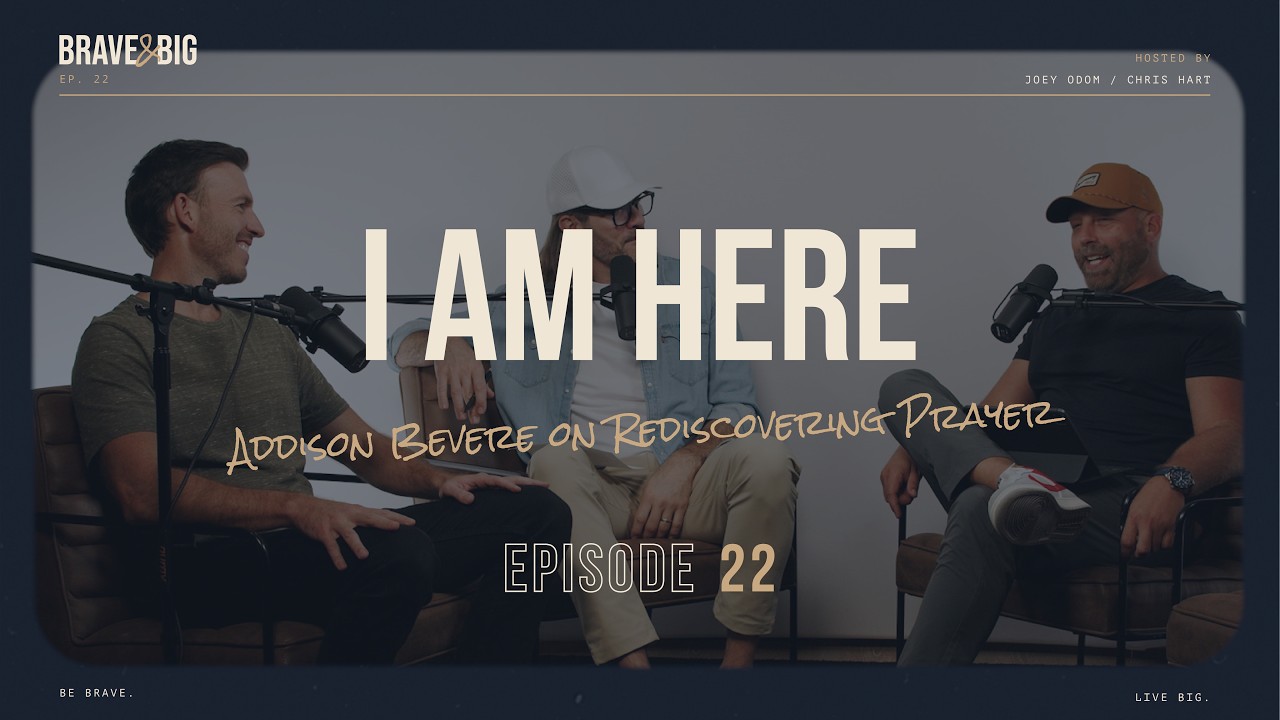
Part one named the season. Part two is the playbook. Joey Odom and Chris Hart pick up right where they left off with the first-ever Brave & Big two-parter, and this time it's all practice: what a wartime life actually looks like, day to day, for you, your spouse, your family, and the people around you.
The framework is five C's, each with the word "pursue" in front of it, because none of them happen by default. Consistency with yourself, because consistency is the foundation of trust, and the default setting of wartime is a drift toward comfort. Clarity with your spouse, because clarity is power and confusion is expensive. Connection with your family, in five-minute plans when five-year plans are impossible. Community with others, because isolation is the killer and it always disguises itself as productivity. And culling: taking an honest look at the things that don't belong in this season, even good things, from the golf habit to the scroll to the drink to the friendship that needs a boundary.
There's also a word for people outside the season: grandparents whose kids are quietly drowning, and the pre-wartime crowd who can build the rhythms now that they'll hold onto when the war starts. It ends where part one did, because it's the best news in the whole framework: this war will end, and how hard you fight today decides what tomorrow looks like.
In this episode
- A word for grandparents: your kids are in wartime, and how to actually help (follow the instructions you're given)
- Pre-wartime prep: the habits you build now are the ones that hold later
- Consistency: as ambitious about the mundane as the exciting, and why it's the foundation of trust
- The one thing you shouldn't be consistent in: the pursuit of comfort
- Winning the driveway: saying yes to the trampoline, the practice drive, the princess dress
- Clarity with your spouse: fighting to see the world the way they see it first
- Clarity is power, confusion is expensive, and simple is hard
- Connection: weekly date nights (a candle and takeout counts), daily micro-moments, eyes on eyes
- Community: why the friendship that gets you in shape spiritually and physically is worth the sacrifice
- Culling: honest looks at golf, alcohol, scrolling, and opposite-gender friendships in this season
REFERENCED IN THIS EPISODE
Part one of this conversation (Wartime: Marriage & Parenting In The Hardest Season). David Brooks, How to Know a Person. Hebrews 12:1 (throwing off what entangles). Andy Stanley on planned generosity and the honest look at drinking. The Army Field Manual on shared understanding, from part one.
Read the full transcript55 sections
0:03Welcome to Brave and Big, where we talk about living a Brave and Big Life. I'm Joey Odom, husband to Kristen, dad to Harrison and Diana, speaker, former tech co-founder, and author.
0:13I'm Chris Hart, husband to Molly, dad to Blakely, Cooper, Landry, and my son Brave. I'm the CEO and founder of the Brave Group and Brave Performance Agency. Joey and I have been having these talks for 25 years, and we're better for it. We believe the same will be true for you. Enjoy this episode. Be brave and live big.
0:36For the first time ever in Brave and Big history, we have part two of an episode. So hey, if you're listening and you've not listened to part one of Peacetime Wartime, just stop it real quick, reverse it, flip it and reverse it. Like go back.
0:54Missy hasn't been involved enough in this podcast, I think, is what the people are saying.
0:59So we're hearing a lot. More misdemeanor. Flip it and reverse it. You know what I mean? We're hearing that. Yes. So if you've not listened to the first part of Peacetime Wartime, please go back and listen to that last week's episode. And this was an unplanned two-parter heart attack.
1:13Like we go ahead and we found the flow a little bit. If you're if you have listened to it, hopefully you're thinking, yeah, this was good enough for a part two. And if you're still not convinced, you really should go back and listen to the first one. Uh, but what a cool topic. And and I'll just say this was kind of a Joey revelation, and he's kind of been leading the charge on this one. It's been great. So I'm really glad that it did extend, and I do think it's powerful. Um, and and I'll tell you what, I'll give you just a little kind of recap of of what we did and where we went in the first time. But it's this premise that you've got to recognize the season that you're in. And this applies in a lot of different areas, but really specifically, kind of the initial thought is this idea, it's like, man, where are you at with your family in this season? And that dictates if you're in wartime or peacetime. And so, just like anything else, if you know where you are, then you can be ready and equipped for where you are. And so that's kind of where we went. And so here's the reality of some wartime principles. And this would be if you've got kids kind of zero to probably 16. Yeah. Okay. This this puts you in wartime, which is a great way to describe it because of your schedule, because of what's on you. You're trying to build something, you're also trying to raise great kids, you're taking care of your parents, whatever your situation is that causes a lot of action. We want to stay ready and equipped and prepared for that action. Okay, so in wartime, number one, recognize that you're in wartime. Know the season that you're in. We even talked about David, like had been at battle and then didn't go to battle. I mean, recognize the season that you're in. Number two, you can't do peacetime things in wartime. It's very different. Your mindset's different, your actions are different, your habits are different, all of that changes, and we want to know where we are and do the appropriate things per season. Number three, don't make a catastrophic mistake in the fog of war. You are tired, there is fatigue, all of that's real. Your plans consistently change, and that's okay, but we're gonna make the next right decision because we're prepared. Next one flexibility is the plan. Right? I I hope some of you are relieved by that. It's like, man, it just seems like a lot's changing. It is. So let's act like it and act appropriately with that. Number five in our list of preparedness for wartime. Communication in war is a combat multiplier. Listen to me when I say this. Communication, good or bad, is the definitive indicator on divorce or a happy marriage. If you ask anybody in the marriage industry, it's gonna boil down to communication and money. And so if we can get communication right, if there can be a unity and a synergy with you and your spouse, and we get communication right, we get it dialed in, we focus on it. Man, you watch how your marriage multiplies, and everything that the two of you put your hand to will prosper because it started with great communication and you walk in the fruit. Number six is the best news of all war will end. You will not be in wartime your entire life, you will not be in wartime your entire adulthood. There is a season for war, it might be spread out, there might be multiple seasons, but wherever you are and whatever you're feeling like right now, this wartime will come to an end. We talked about the simple idea. It's like, man, for the joy set before Jesus, he endured the cross, man. For the joy that's on the other side of all the effort you're putting into this life of yours, there is greatness on the other side of it. We're excited about you walking into it. Okay, so we laid a little groundwork. This is the first time ever for kind of the secondary piece of this. And I need I need the expert Joey to come back in. The groundwork has been laid. Let's talk about wartime and let's keep adding to this and kind of add this next layer.
5:37Well, one thing I would note here too, Chris, is that this this is we are specifically tailoring this idea around kids and marriage. This is we all know this. There's not just one wartime season to your life. You're gonna have other moments, and there's gosh, there's probably a whole other episode, and we'll touch on peacetime too, but there's a whole other episode on what peacetime should look like because peacetime, what you do in peacetime prepares you for the next war. So there's a bunch to unpack there, and we're not gonna we're not gonna dive into that one yet. We have to buy the buy the book in three or four years. So, but but just to know, you may say, like, well, I'm I'm in wartime right now and I'm in my 60s. Yeah, yeah, that's okay. Like you're you you might your parents may not be doing well, you may have issues with your kids, so please hear us there. Like, this is not the only wartime period, but I do want people who may not fit right within that prototypical what we said zero to sixteen, zero to eighteen range with kids. So I want, I want, I want grandma and grandpa. Like, if you're if you're a grandparent and you're listening, I want you to know something. If you have kids with with kids, so if you have grandkids zero to sixteen, you just have to know your kids are in wartime. They may appear they're doing great and they probably are doing great a lot of days, but please just know that they are probably drowning a little bit. They might need to talk to you about it, but they might just need you to take the kids for a date night. They they might need you to just take the kids for a weekend. And by the way, just a quick little pro tip for grandparents follow the exact instructions that mama gives you, whatever it is, just go ahead. You may not agree with it, but follow those exact instructions. This is actually funny, Chris. The other day, Gianna, my daughter, watches watches dogs in the neighborhood, bunch of dogs in the neighborhood. And washes or walks? Um, that's a great question. Watches. Um watches dogs.
7:29Way better than washing.
7:30Yeah. That would be that'd be uh that'd be a pretty aggressive job for for a 16-year-old, but she watches them. And there was there was this dog, there were two dogs, and this sweet little dog named Ralphie, who I love. The owner said that Ralphie's a little bit overweight, and so they said you have to just give Ralphie this little bit of food. And this sweet little guy, he was so hungry. He wanted more and more, and he whined, he wanted to eat the other dog's food. And I had to, I was talking to Kristen about it. She said, Joey, this is your preparation for being a grandpa. This is what's going to happen. You're going to get some instruction from Gianna or Harrison or Harrison's wife or Gianna's husband that you're not going to like, you're not going to agree with it. And as long as it's not actually hurting the child or immoral or unethical or illegal, you have to listen to it. That's that's a long, and it was, it was like, oh crap. Like that's maybe a little bit harder than I thought it was. That's a long way to say. Grandma, grandpa, your kids are in wartime. You just have to know it. So be thinking, how can I give them some relief in the wartime? What are the practical things? Chris, you said it in the last episode on communication, tailoring your communication back to what with the way the person receives it. So, grandma, grandpa, you may have to think through some ways. What's the best way that your son or daughter or your son-in-law or or daughter-in-law, what's the way that they receive help? What do they actually need right then? And you may, it may require you to be a little bit perceptive, maybe require you to communicate a little bit more. So this is how it applies to you. And I believe that's super important. The other thing, how about people, how about people who are um, how about your pre-wartime? Let's say, let's say you, let's say you just got married, let's say you're engaged, let's say that that you don't have kids yet, but you're looking towards the future. What are the structures right now that you can be setting up to prepare you for wartime? We're gonna get into a bunch of those. And I actually think, Chris, correct me if I'm wrong, I actually think what we're about to talk about is probably a lot of that, but but what are those rhythms that you can set now that become part of your family culture even before you have kids that you can hold on to when wartime comes? Yeah.
9:40Man, I love that idea. I work with young athletes a lot and college students, and it's cool because if if that's you in this season, you haven't made enough mistakes to like set you back yet. There's there really is kind of a blank slate in front of you. And a lot of the times you have time to really work on you. Now, what I see a lot of times is we're filling that time with other things that aren't as maybe productive as they could be. So, and I want you to have a blast, but think about it through that lens like I'm actually preparing for wartime. You know, if if you're it's like, man, I'm gonna go be a Navy SEAL, that's great. Get your fitness right. Yeah, man, get get your body ready, get your mind ready. Like, what are the habits you can create now? What are spending habits now that when you have a lot of money are really gonna pay off? What are relational habits now? Man, I check on my friends. Trust me, you're gonna need to establish that now because you'll have less time in the future and you got good at it now. Yeah, right. So I love the idea that we're kind of preempting. If you're coming out of wartime, great. Here's some thoughts. If you're coming into wartime, great, man. Let's get ready for it. Yeah. And then now I think like let's let's keep talking. If you're in this wartime, Joey, where do we want to kind of pick up and get real practical with it?
10:56Well, the tech out of what you said there, I don't I don't we we all grow, we all evolved, we are very far from a fixed mindset, but it is important. Like the the things that you're establishing now, you can't automatically expect for them to change if if you have those ingrained now. It it reminds me of the old. Do you remember Deep Thoughts by Jack Handy on Saturday Night Last? Yes. Yes, one of my absolute favorite ones. He says, if I'm ever really rich, I hope I'm not mean to poor people like I am now. So listen, that's that's all right. That's all right. Get it right now. Yeah, let's be nice to people of all incomes. Um, but so so I think I think one thing that we one thing we've heard coming out of that first one, and one thing is we've talked about this with people is is basically like, hey, I understand the principles, I like it, you've given me some to-dos, but really let's let's break it down in really simple terms. And this is what we want to do. Like we we want to, man, we want you to get excited, we want you to get it motivated, but ultimately, as we do with every episode, it's what's the small step? Hey, yeah, brave and big life. We all want we all want to live that, we all want you to live that, but what's my small step? So we're gonna give you a bunch of these. And so, in terms of five C's, like if you can think through what does what does my wartime life look like? And there can be a bunch more, and there's a bunch more great stuff, but these five C's, I believe this is what a can this is what a great wartime life looks like. The first one starts with yourself. So we got we have some little hits self, spouse, your family, others, but the first one is with yourself, and that is purely consistency. I think I think the best advice, one of my friends, Jared, turned 30 a couple years ago, and his wife had us all write letters. And the one thing I told him in your 30s, this is the decade where you have to be consistent. And I'm using 30s as an example, war time. You have to be consistent because this is the time when people start falling off workouts. This is the time when people start falling away from quiet times, or this is the time that people start get making those consistent. This is the time that people, bro. I didn't maybe say I didn't really do a consistent quiet time till deep 30s, early 40s. I read my Bible every day now. It's part of what I did, but it took a long time to do that. So I believe, and those are those are a couple examples, but let's start breaking down some of those. Your consistency in how you show up and where you show up and what you do is so critical. So, Craig, when you think about that, will you talk? You are one of the most consistent guys I know. Will you will you talk consistency? Will you will you talk some of those areas? Will you talk the value of that?
13:33How about this thought? Consistency requires you to be as ambitious about the mundane as you are about the exciting. That kind of sums it up for me, right? I and I man, I can be a person that gets real excited, and then I'm all in. Right. And if I'm not, I don't want anything to do with it. So I do think this is learned. That's a great thing about consistency. Consistency helps you to be consistent, right? That that's that's what's great about it. So, but I I think you're right. It it's like, man, what's it gonna take to actually have an amazing relationship with God? Consistency. What's it gonna take to have unbelievable friends? Consistency. I mean, you can everything that would ever be of value to you, the starting point of that is consistency. And and so it's interesting because it's almost like part of courage. Like, I want to be courageous. That's gonna start with being consistently courageous. You know what I'm saying? Like it's just and and so what's cool too is consistency creates confidence. And and that's man, if we're gonna be in wartime, yeah, I mean, if we're going to battle, if we're doing the hard things, if we're choosing hard on a daily basis, I need you to be courageous and I need you to be confident. And both of things, the both of those things start with consistency. And it's it's kind of like you're building your character right now, too.
14:55Yeah, yeah.
14:56Your character is being revealed in the wartime. And so I so I say that because it's like consistency is the foundation of trust. I mean, Joey, I can trust you because you're consistent. My wife can trust me. I'm not perfect, but man, I try to be consistent and steady. If I say I'm gonna do it, I do it. Our our kids know that. Right? Well, does dad make mistakes? Yes, but man, if he says he's gonna do it, he is going to move the world to make it happen because I want to be consistent with my word, because that builds trust, which is building my character right now.
15:31Hey, and listen, I I had never put those two things together the consistency and trust. And when you when someone doesn't trust you because you've been inconsistent, they're not punishing you. That this is this is just a natural subconscious, like of course, it's so it's not it's not like someone's being mean to you or they're they're you know they're getting on to you. It's just like that's the natural result of a lack of consistency, is you have a lack of trust as well. So let's let's hit some of these categories. I want to go two categories on consistency. I want to go consistent categories that require consistency, and then categories where we see people embedding consistent things that shouldn't be there. We're gonna go into some of that on the last one, but like what have you seen people in this in this season of life becoming consistent on that they shouldn't? And what are some areas where we should be consistent?
16:24Yeah, you know, we we talked about another bad C-word on the last episode, which is comfort. Yeah, right? You thought I was gonna say cake. It's like no, no, cake. I like cake, but it's not great. Yeah, but comfort, yeah. I I see people becoming consistent in the pursuit of comfort. Come on, son. Well, so think about this season of your life, man. You're getting after it, you're building a business, you're you're doing good things, it's great. It it it's the it's the fruit of wartime. But just because now you know you've got a house that you're kind of proud of, and man, your wife drives a cool car, and that is not a time to be consistently comfortable, man. That's a time like that's where I want to be uncomfortable. That's what I want to, I want to live this life of faith. Gotta, I know there's a lot going on, but man, what's the next thing you're calling me to get in faith about? What are you what are you what are you believing God for right now that if he doesn't come through, it can't happen? Right? Let's let's not get consistently comfortable.
17:28Yeah.
17:28Let's look at it and say, I'm I'm going to be consistently challenged and consistently in a place of trust and faith with God, not the other way around.
17:38Hey, that that idea around the pursuit of comfort, I don't have the quite the quite the words for it, but thinking about it is that you the default setting is a pursuit of comfort. Like it's almost like you like fall into comfort, like but you unless you're pursuing, unless you're actually pursuing discomfort, I mean, I actually think you have to pursue sacrifice of discomfort. Sacrifice is putting to death something that's smaller than the end than the end result. So you you don't have a piece of cake because you want something that's greater than that. You wouldn't sacrifice something if it weren't if it weren't for a greater good. So it's so let's so I when I think about some of these, like, hey, quiet time, that's a sacrifice, but that's something that needs your consistency, your workouts, and please don't overcomplicate. We're talking walks and we're talking like just daily activity that requires it. Even things we'll have another episode on this, but one thing that you and I are really big believers in tithing. There's something. Let's get consistent on tithing. Hey, let's stay away. We'll talk, we'll talk a little bit later about other vices and stuff. It's easy to fall into. Um, but I do love this idea that the the default setting is going to be a pursuit of comfort, which means we have to combat that with a true pursuit of discomfort and sacrifice.
18:58Well, and remember too, pride is always going to pursue comfort.
19:04Man.
19:04Because it's pride is saying that I deserve this, which equals comfort. Right. So pride, listen, pride and wartime is saying you worked hard during the day. What you deserve is to sit on the couch and not have to entertain the kids. Well, let's just call it what it is. It's like, yeah, it's more comfortable. It's pride. It pride says you deserve that. But where we want to go, let's win wartime.
19:33Yeah.
19:34So that's where we talk about man, come home and win the driveway, get uncomfortable, decide you're going to walk in and be a great parent. The last thing you want to do is go jump on the trampoline. Man, I I my girls were young, and it's like, Dad, do you want to put on a princess dress and go jump outside of something? I'll tell you, it's not, it's not my top thousand things I want to do, but uh I'll give you a yes because someday on a podcast I'm gonna I'm gonna let people know I did it. You know what I mean? But that's the reality of it. It was the hardest choice is to go do what you don't want to do, which might be the best thing for your kids. I don't, I don't, I do not want to drive you to practice, but instead I'm deciding I'm excited about it. I'm gonna ask you a couple good questions, and there might be a definitive principle that changes the way they make decisions in the future. Because we said yes and we got uncomfortable. And here's the deal: if we'll do that consistently, see that's the thing. It's like, I don't know, I drove my kid three times last week. We didn't have any breakthrough. Great. I got to feel over the next three months of us being consistent with this in wartime, there will be breakthrough. And if nothing else, your kid knows that when you say you're gonna do it, you're gonna do it, you're gonna be in the truck, we're gonna take them to practice.
20:42Come on.
20:43And that's a big win. Yeah, that's how we thrive in wartime.
20:47That's right. So, first C consistently, that is really again, that's really with yourself, is is are you making those decisions to pursue discomfort? The second one is really I'm gonna this is very specific to your spouse, is to pursue clarity. And really, what we're you know, in all these like maybe the first the word but in front of all these could just be pursue. Because are you gonna be perfectly consistent? No. But can you pursue consistency? Yes. Are you gonna be perfectly clear with your spouse? No, but can you pursue clarity? So pursuing clarity here, and this goes back to communication, go back to left last week to talk about this. But the goal, let's not forget, it says that you want to create a shared understanding that supports action. It's from the Army Field Manual. So you have to fight to be on the same page with your spouse, not just on small things, but on big things. Not just on big things, but on small things. And I will tell you, buddy, it is a fight. And that's because I'm reading a book right now. I think it's called How to Know a Person by David Brooks. It's a great book, but he talks about perspective. He talks about the way that everybody individually sees the world different because it's totally shaped by all of our experiences and our predispositions. And so you and I. Or you and Molly or Kristen and I, we can walk into a room and it looks completely different. You and I walk into a room full of people and we get excited. We get adrenaline going. Kristen sees that and she looks at which corner she's going to first, or who's the one person she can go have a one-on-one call talk with where you and I want to know everybody's name. And it's just because we see things differently. So when I say we're saying it's like, yeah, no duh, you get clarity with your with your spouse. No, no, no. It's a fight. You're gonna have to fight for clarity. You're gonna have to. This is one of the hardest things I believe, Chris, that anybody can do. You're gonna have to do everything you can to try to understand the way they see the world. You may not agree with it, but there's no there's nothing you can do. It is a non-starter until you have gotten as close as you can to understanding how they see the world. And then you can figure out what to do with it. But it all begins with that, which obviously back to oh, interesting, this is uncomfortable. Oh, interesting, this is not a pursuit of comfort. Comfort is just seeing things the way you want to see them. So talk about that a little bit. The fight, and using that word specifically, that fight for clarity with your spouse.
23:16Well, how about this? Clarity is power, and confusion is expensive. Okay, so I'm gonna fight for clarity because man, a lot of times I can't afford the confusion that comes from a lack of clarity. Man, it it there's a there's a toll to pay for confusion in your marriage. Wow. There's a toll to pay when your kids are confused about the culture of your home. Right? I I want to be clear on that. I want to be clear, I want to fight for clarity so that I can be clear on our expectations and how we roll and how we operate. And what I know to be true is if we'll fight for clarity, then momentum follows. Yes. Man, when I'm clear, when a team is clear, this is our objective. And I'm not just saying, hey, the goal is to win a Super Bowl, I'm talking about clarity on this play. That right tackle has to move that defensive end, and the the guard's gonna pull around. And if there's complete clarity on how to execute, we can go score on this play. And then if we'll do that consistently, then that's gonna win games, and that's how we go to championship. Yeah. Right. So we love the idea of clarity about like the ultimate big picture vision, but I think a lot of what we're talking about is the real-time, small micro detail of life. And if I'm clear on the expectations for dinner tonight, then we can win at dinner.
24:48That's right.
24:49If I'm clear on our family schedule for this week, then there's no expensive. I I drove my daughter to a soccer practice that didn't exist last week, and there was an expense to that, right? She's calling mom, she's like, you know, the whole thing there was a lack of clarity on where we were supposed to be and what we were supposed to be doing. Yeah. Did we go shopping and eat Mexican food and have a blast that night? You better believe it. We got us a free night. But we could have been more clear and created some better expectations with it. So maybe maybe the last thing I'll throw at you for this is that what clarity does is it simplifies and we can execute simple. Yes. And and it's opposite, right? Complexity hides weak thinking. You think about that? Have you heard somebody that's just like over talking and they they are too smart for their own good and nothing, and it's like, oh wait, is that what you meant? And it was actually really simple, but that they're they hadn't thought it through enough, or they weren't an expert enough to actually bring it to a clear, yes, simple explanation.
25:54Yep.
25:54And and so I think that clarity exposes strong leadership. Man, if you're a great leader, and that that's our goal, is like lead well. This whole episode is kind of solutions for wartime.
26:09Yeah.
26:09Right?
26:10Yeah.
26:10And we need to lead well during wartime. And so we've got to be very clear in our own thinking, clear in our own direction, so that we can provide that and lead that and show that to everybody following.
26:23That's right. Simple is hard. Period. Simple's hard. Third one, first C consistency, second C clarity. The third one is gonna sound a little bit like clarity, but it's distinctly different, and that is connection. It is pursuing connection. And what when we talk about connection, this is really within your family. Where clarity is maybe with your spouse, connection is with your entire family. So connection with your spouse looks like weekly date nights. It's something you gotta pursue. And and let's not over let's let's go simple again. Hey, put some effort into it, but if all you have that night is the back porch for half an hour that week, come on, that's a date night. Call it a date night, light a candle. Hey, I'll tell you one of one of the best date nights I ever had with Gianna. This was from my friend Jefferson Bethke. He said, Hey, try this, go get takeout, turn off all the lights in the house and light a candle. And buddy, Gianna and I did that. It was awesome. It just changed the environment a little bit. So date nights are all around you, they don't have to be expensive. So, but fight for that. Weekly date night. How about intentional daily moments? Just these little micro moments. Last night, Gianna and I could have very Kristen was at a small group, Harrison was out with some friends. So Gianna and I had the night, and we could have very easily sat down and watched TV, but instead we've played Rummy for two hours, one-on-one, not to brag, totally crushed her. Did you really dominated? No hold up. You know what I mean? Play like a champion, son. Like I'm not, she's not gonna win. But we had we had a great time playing rummy together. How about this small focus time with your kids? How about these moments on connection? How about this idea of eyes on eyes? How about, hey, it's not when someone's talking to me, my phone is absolutely gone. It's just gone from the situation. Throw it on the couch, put it in a drawer. We've talked about this on technology, but what about fighting for those phone-free moments? We we have friends, I have a friend who was going through a hard time in his marriage a couple years ago, and I said, Hey, I'm willing to bet something. My bet is that 50% of your problems in marriage would be solved if you just put your phone away from six o'clock to nine o'clock. And he said, No way. He goes, probably 70%. He knew it. And it's just it's simply that. So that fight, that pursuit of connection. And again, what I love that Chris that you said is especially in the fog of war, it's probably hard to make five-year plans, 10-year plans at times. You can make five-minute plans, you can make 10-minute plans. So let's fight for simple, let's fight for the immediate, because all those immediate, the culmination of all those things becomes something, becomes your future. So this quest, this pursuit, this fight for connection.
29:11I think you'll like this. The speed of the leader is the speed of the team. But the strength of the team is found in its connection. Man, it's kind of that whole idea. It's like you want to go fast, go alone. You want to go far, go together. So good. Man, I want my family to go far. Yeah. You know what I mean? I want my friends to go far. Right. So this idea of connection, and I can't help but think, Joey, like connection creates influence. Yes. Right. And so, and and what connection requires is our focus. That's what I hear you saying. It's like, hey, you put your phone down and give me a little eye-to-eye action, and all of a sudden, then I can unleash my focus, and where there's focus, there's authority. Yes. So listen, we want to win in wartime. There's a lot going on in your life. Fight for connection. That's what I like. It it's again, we could either pursue this, we can fight for this. That's the reality. There's a verb to each of these that requires our action. Yeah. But if I can connect, then I can influence. And if I can influence, then I can impact. And that's what we're going for. Man, I want to impact these kids. I want to impact the people that I get to work with. I want to impact the other men in my church. You know what I'm saying? But I've I've got to be recognizing the moments. And you know this connection just requires intentionality.
30:36That's it.
30:38And and we talked about this. It's like, you know, let's let's get in the habit. Let's create a culture of our lives. How we do things is we check on people. I have specific times. I am led by my calendar. I have to be. And I have notes in there on people to check on throughout the week. I have I have a note in there on two, don't tell her, but Tuesdays at two o'clock, I text Molly just so that I don't forget to text, like, checking on you, love you, you are fantastic. Gonna kiss you later, right?
31:06Yeah.
31:07I I think she's probably on to me now. She knows there's in the calendar. We share a calendar. But the reality is it's like, man, those things are in there as notes to connect so that it's part of the life that we're living.
31:16I I think Andy Stanley says this about um, he says this about generosity. He's he says that real generosity is planned generosity. Yeah. So it's not just getting excited and giving towards something. It's like, no, we've made this our lifestyle. Real love is planned love. You plan that I hey, I want to make sure it's so important to me that I can't miss it, that it's gonna end up in my calendar. So super important. Um, the the the fourth one, the fourth one is really with others. So consistency is with yourself, clarity for your spouse, connection for your family, community with others. That's the fourth one. Community with others. It this these life-giving friendships. We've talked about this a bunch, Chris. We've talked about covenant friendship, we've talked about you know how that makes you invincible. We talk about the people you surround yourself with. But I I would love to, and by the way, we all know the benefits, but I was I thought about one this morning. I did a workout with with one of my best friends, Heath Wilson. You know Heath very well. Heath and I had been, um, we worked out at his gym for eight months very consistently, and we're we are in the best shape we've been in in a long time. And I said to him, I was like, Isn't it interesting that our community, our friendship led to physical results? Isn't that interesting? That you have it's the cascading effect of yeah, you're in community and you become better in a lot of areas. Heath texts me in the mornings after he finishes, he sends me a check mark when he finishes his quiet time. So it's happening spiritually. So all of this, but I believe, especially in wartime, man. Of course you don't have time for community. No way. Of course you don't, but you have to make it. What where can you you have to please go get involved at church? Please go volunteer at church. Please go they got child care probably, so that's a good thing. Like, please get involved in a small group. Please have life-giving friendships. We talked about it before. This this post, the this post that we put on on our Instagram on the happiness uptick from one friendship a week, talking to the same person once a week is $150,000, the equivalent of $150,000 raise. There's value to this in your happiness, in your physical, in your spiritual. And so I'd love to hear. Oh, go chase community, pursue community. Great, great idea, Joey. What does this look like? How can somebody right now listening who may feel like they're in wartime, how can they go pursue chase community?
33:46I just think you've got to come to that initial recognition that a recognition that isolation is the killer. And what we're naturally going to feel, what our flesh is gonna pursue is isolation because again, there's some comfort there. And and we could almost package it like, well, if I can go get isolated, I can get more done, and I'm getting more done for my family. And I just think that's a lie that we cannot and will not buy into. The reality is for us to stay healthy, for us to stay sharp, we have to be in community. Yeah, my life is a result of community. I I wouldn't trade my life with anybody, and that's mostly because of the community that's around us. And what community does is give you that that confidence that no matter what, you will eventually win. Yeah, it it might not feel like a dub today. Today was a hard day, but that's what community is great for is it catches you wherever you are and gets you to that next place that you need to go. My flow at our church is everything. We're there multiple times a week. It's not convenient. We still do Wednesday night services, we've had kids not be able to be on certain sports teams because it conflicted with Wednesday nights, and we made that choice in pursuit of community. Yeah, because we recognize the power of it, and it's shocking. A lot of the times, man, somebody will give me a great word. It's like, man, I needed that. Most of the time, I show up and it's my time to pour out and like contribute and give, and that keeps me healthy in the midst of having to pour out in so many other areas. So I think that's some of the power of community. And I I kind of use that example of like skipping a team because that there's some sacrifice to community, there is some effort to it, there's some protected time. It is easier to go to the lake on Sunday than go to church. I get it, and I love the lake. But I also love the idea of going to the lake and saying, hey, you know what we do? We come home on Sunday, Saturday nights so we can get up and go on Sunday. That's right. Yep. There's something to it. There's something about being in person, being in a small group, being hooked up. Man, it Molly is real involved with school PTO. There's a community there. They help each other, they care about each other, they're building the school, and they're better for it.
36:08It's good. Number five, Chris, I'm gonna I'm gonna drop a word on you that you uh that we don't use a lot. This is this is this is number five. When you are in wartime, this is what a wartime life needs to look like, and it is a life of culling. C-U-L-L-I-N-G, of culling. There are things in your life in wartime that don't belong in wartime. There are things now, these may be it may be a season, it may be forever, but there are things in your life that don't belong in wartime. I'm gonna say something that may sting a bunch of you. And I can say it because I'm not a golfer, but consistent golfing in wartime doesn't belong. Hey, you know your family's rhythms, I get it. Hey, if you're doing it on Friday with, you know, when you've got clients out, that's a little bit different. But I'm saying, hey, if you're taking up a quarter of your weekend to go golf, sorry, it can happen again. Like it can happen post-wartime, I promise you. It can happen when you go. Maybe if you have a guys' trip, we we encourage that kind of stuff. Maybe that's the time to go golf. But in wartime, it doesn't belong. And I know that sucks, and I'm really sorry, but again, we only sacrifice the lesser so that we can get the greater. Golfing is the lesser. Your connection, your relationship, thriving out of wartime into peacetime, that's the greater. Hey, how about how about taking a real honest look at alcohol? I think we need to do, and I have a I have a I have quite a quite a journey on that myself, and I'd love to talk about it. I think that I think a lot of us, it's easy to kind of drink your way through your 20s and then buzz your way through your 30s in in a in a justifiable way. Hey, what does that look like? Does that mean you're falling asleep on the couch at 8:30 at night when you want your your kids want to be with you? Do you have less energy? Are you waking up a little bit, a little bit groggy? Take an honest look at alcohol. I'll repeat again. I think this is my third Andy Stanley reference of the day. So forgive me here. If this were a drinking game, we'd be drunk if it were an Andy Stanley reference. But Andy says, here's how you know if you're drinking too much. If someone's ever told you you're drinking too much. Like, surefire way to know. Just if someone's told you. So I think an honest, an honest look at alcohol in your life. I think scrolling, you've heard me talk about it a ton. Let's be honest with ourselves. Here's how you know if you're scrolling too much, if someone tells you you're scrolling too much. Fourth one we've talked about. Hey, I will tell you, one of our, you're in my one of our best friends from college, who I love. She's just the greatest. She after we got married, she and I would would send emails, we'd keep up with each other. And Kristen told me once, she said, Hey, I know this is innocent, but you just can't have opposite gender friendships anymore. She's right. She's 100% right. It was never going in a bad way, it was never going anywhere. It would, you know, it was not, it was not anything that would have ever damaged my relationship, but the precedent, the appearance of possibly something that's not right. And then maybe even the long-term effect of that, you just have to eliminate it. It just doesn't belong. So there's some stuff. I've hit four there: scrolling, golfing, alcohol, opposite gender relationships, taking a real hard look at all four of those. I'm suggesting for all of us that you're not just wholesale eliminating any eliminating anything, you're actually taking a hard look at it, having a discussion. But how's that hit you, Chris? That idea of culling, removing the things, even good things at the wrong time is a bad thing, or bad things that just need to be rude in general.
39:46Man, I like it. You know, I can't help but think about this idea of it being this pruning process.
39:53Yeah.
39:54And I've got to eliminate some things so that I can go where I haven't gone before.
39:59Right.
39:59That the word talks about like freeing yourself from weights or sin that easily entangles and could slow you down. Man, we're in wartime. We're moving. We we have to be light, we have to, we have to be active and and ready to respond and ready to initiate, right? So I think about it. We we went here on the original episode just a little bit, but I had a I had a friend that that had been drinking, um, you know, realized it, got a call from his son, and was not in a position to actually go help his son. Wow. And and so I think about that. It's like, dude, it's wartime. I want to be ready for that call. I want to be ready to respond. And so, man, I want to be ready to be above reproach when it comes to the opposite sex. I want to be, I like what you're saying, man. I I could be scrolling or I could be reading, I could be scrolling or I could be interacting, right? So it's just fascinating to think about like living a life, especially in this kind of a season where pruning is pre is prevalent. I mean, there's a calling to our life where it's just like, listen, I'm just removing anything that would slow me down, hinder me, or isn't advancing the mission. Yeah. Right? The mission's our family right now. I mean, for some of you, the mission's building that business, the mission's being involved in the church. Like there's things that we're supposed to be doing, and then there's always going to be plenty of distracting opportunity, and we've got to be aware of that, do something about it, and and do some removing so that we can do some advancing. Wartime, there's some attack that comes with it, but it you respond to the attack by advancing.
41:35Yeah.
41:36And I think if we'll really start thinking like that, it's like today we move forward. Today I'm gonna be great in my community. Today I'm gonna connect. Today I I fight for clarity. Today I'm gonna be consistent. Like if we're doing those things, Joey, it's amazing the fruit that comes from it. And and it's it's how I think we can be separated. That's the goal, man. What we want to do is give you an unfair advantage. That's it. And this list creates an advantage on how to win in wartime and legitimately set you up for the rest of your life.
42:09That's exactly right. It's funny thinking we want you to be consistency and can in consistency, consistent, being consistent. And then on all the other four, four clarity, connection, community, calling, you have to be apply that same level of consistency on that. And so it all does come back to what you say and this is over time. And again, let me just remind you, and we'll we'll close it out here, and then we'll give just one small step here. But but to close it out is this encouragement war will end. The war is gonna end. Please keep fighting. Please know that this war will end, and the way that you fight today is gonna dictate what your life looks like tomorrow. That the harder you fight in war, the earlier peacetime will come. That they the more that you do, you're gonna experience the fruit of what you do today. So I want to I want to encourage everybody listening here, please, please listen to these couple episodes a couple times. Please share this. Hey, if you're in a small group, send this around and have this as your discussion piece. Let's let this. I mean, gosh, we're talking about Chris and I talking about how we're gonna build resources around this and all that, because I think it's so important. But please share this with someone who needs to hear it. Please share it with the people around you because I really do believe that this revelation and these steps will dramatically change your life, your family's life, your relationship with your spouse, your relationship with your kids, your relationship with grandkids who aren't even born yet by what you do today. Chris, we close it every time. I don't even know how to put a bow on this, so I'm gonna I'm gonna take the easy route and just ask you. So we we want people to live a brave and big life. We want to pursue that and chase it together. People who are listening, we're all a community together here, so how can we chase it together? So, what is that one small step, the next seven days? What is the small step that will help people live brave? Be brave and live big on this topic.
44:01This week I'm gonna ask you to focus on two of the things. Okay, number one, what area of your life do you need to be more consistent right now? Be simple with it, write it down, put a name to it. And then number two is where do you and your spouse know that you need clarity? That's good. That's it. Where are you gonna be consistent and where are you gonna fight for clarity? And I think if we can start there, that's gonna be the step. That's gonna trigger everything else that needs to take place so that we can live right and live well and win in wartime.
44:36Okay, real quick, triple S for us. Subscribe, share, star. Give us five stars wherever you listen to podcasts. Thank you so much for joining us this week on Brave and Big. Brave and Big is produced by Stonest Podcast and the brilliant Miles All Britton. We will see you next week.